
Lancer:
A Forgotten Western That Redefined Family on the Frontier
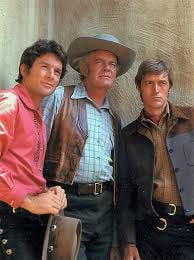
In the late 1960s, the Western on American television was at a crossroads, moving away from the clean-cut good-versus-evil stories of the 1950s toward more psychologically nuanced explorations of family conflict, moral ambiguity, and the harsh realities of frontier life. Amid hits like Bonanza and The Big Valley, CBS introduced Lancer on September 24, 1968.
The series, which ran for two seasons and 51 episodes until June 23, 1970, offered a fresh take on the ranching saga by focusing on fractured family bonds and the collision of contrasting worlds. Though short-lived, it became a cult favorite for its sharp writing, strong performances, and themes of redemption and brotherhood.
A Ranch Under Siege
Set in California’s San Joaquin Valley in the post–Civil War years, Lancer told the story of Murdoch Lancer, a Scottish immigrant who built a 100,000-acre ranch through sheer determination. Besieged by raids from the Pardee gang, Murdoch summons his estranged sons: Scott, a Boston-bred Union Army veteran, and Johnny Madrid, a notorious gunslinger with a shadowy past.
The pilot, “The High Riders,” directed by Sam Wanamaker, opened with a violent raid that left Murdoch wounded and desperate. The crisis forced Scott and Johnny—strangers to each other and to their father—into an uneasy alliance. What followed was a weekly blend of action, cattle drives, and intimate family drama. Unlike the idyllic ranches of Bonanza, the Lancer homestead was depicted as a working, precarious enterprise under constant threat from both outlaws and modernization.
A Strong Ensemble
At the show’s core was its cast. Andrew Duggan portrayed Murdoch Lancer with stern authority and buried regret, his Scottish backstory underscoring his outsider status in the New World.
James Stacy embodied Johnny Madrid with brooding intensity, balancing swagger with vulnerability. His real-life story turned tragic when a 1973 motorcycle accident cost him an arm and a leg, but in Lancer he left a mark as one of TV’s most compelling Western antiheroes.
Wayne Maunder played Scott Lancer, the educated Easterner whose rationality and restraint offset Johnny’s hotheadedness. Together, Stacy and Maunder forged a believable sibling rivalry that carried much of the show’s emotional weight.
Supporting players rounded out the family dynamic. Elizabeth Baur brought warmth as Teresa O’Brien, Murdoch’s ward and the household’s steadying presence. In Season 2, veteran character actor Paul Brinegar joined as Jelly Hoskins, a loyal ranch hand who added comic relief. Guest stars included a young Sam Elliott, Bruce Dern, Ron Howard, Cloris Leachman, and even Tom Selleck in an early role.
Solid Production, Mature Stories
Produced by Alan A. Armer for 20th Century-Fox Television, Lancer was filmed in color against striking California backdrops. Creator Samuel A. Peeples, who also wrote for Star Trek, infused scripts with moral complexity.
Episodes often followed a familiar pattern—an external threat leading to a showdown—but added depth through themes of redemption and reconciliation. Music by David Raksin underscored the drama with a haunting theme that lingers with longtime viewers.
Reception and Afterlife
While praised by critics for its intelligent scripts and strong performances, Lancer never drew blockbuster ratings. It aired opposite popular comedies at a time when viewer tastes were shifting away from Westerns. Canceled in 1970, it briefly resurfaced in reruns before fading from public view.
Its cultural afterlife has been surprising. Quentin Tarantino spotlighted Lancer in his 2019 film Once Upon a Time in Hollywood, with Timothy Olyphant playing James Stacy and Leonardo DiCaprio as a guest villain. That homage reintroduced the series to a new generation.
Stacy’s death in 2016 at age 79 brought renewed appreciation for his performance as Johnny Madrid, and fan communities continue to keep the show alive online through retrospectives and fan fiction.
A Western Worth Revisiting
Lancer may not have enjoyed the decades-long runs of its rivals, but in just 51 episodes it carved out a distinctive place in television history. With its mix of action and psychological depth, it remains a Western that dared to put family drama at the heart of frontier storytelling.
In today’s era of streaming revivals, this forgotten series deserves another ride.